Categories

Physical biology explores cellular functions through physics principles, utilizing concepts from Molecular Biology of the Cell editions.
Resources like free PDF downloads from Chemistry.Com.Pk aid study.
Physical biology, a rapidly evolving interdisciplinary field, applies the principles of physics to understand biological systems at all scales. It seeks to explain cellular processes – from molecular interactions to organism-level behaviors – using quantitative and theoretical approaches. Resources like Alberts’ Molecular Biology of the Cell, available in various editions (including 7th edition PDF downloads), provide foundational knowledge.
This field integrates concepts from biophysics, biochemistry, and engineering. Online platforms, such as the Internet Archive, offer access to essential texts. Understanding membrane structure, transport, and the cytoskeleton are crucial, as detailed in these resources. The goal is to move beyond descriptive biology towards predictive models.
A physical approach to cell biology is crucial for moving beyond simply describing what happens to understanding why and how. Utilizing physics allows for quantitative predictions and the formulation of testable hypotheses. Resources like Alberts’ Molecular Biology of the Cell (available as a PDF) highlight the importance of physical principles in processes like membrane transport and cell signaling.
Traditional biology often lacks the predictive power of physics-based models. Accessing materials, even older editions, through platforms like the Internet Archive, demonstrates the enduring relevance of these concepts. Understanding energy conversion, cell cycle regulation, and mechanics requires a quantitative framework.

Cellular structures, detailed in texts like Molecular Biology of the Cell (PDF versions available), exhibit unique physical traits impacting function and dynamics.
Cell membranes, central to physical biology, are primarily composed of lipid bilayers, a foundational concept explored in resources like Molecular Biology of the Cell. These membranes aren’t static; they exhibit remarkable fluidity, crucial for protein function and cellular processes.
Understanding this fluidity requires considering lipid composition and temperature. Accessing PDF versions of relevant textbooks facilitates deeper study of membrane transport and electrical properties. The membrane’s structure dictates its permeability, influencing the movement of molecules and ions, a key aspect of cellular signaling and homeostasis.
Membrane proteins, integral to physical biology, perform diverse functions – transport, signaling, and structural support – all detailed in texts like Molecular Biology of the Cell. Their structure, often complex, dictates their specific roles within the lipid bilayer.
These proteins can be integral, spanning the membrane, or peripheral, associating with the surface. Studying their structure, often aided by PDF resources, reveals how they interact with lipids and other proteins. Understanding protein sorting and intracellular trafficking, also covered in these resources, is vital for comprehending their localization and function.
The cytoskeleton, a core focus in physical biology, provides structural support and enables cellular movement, as detailed in resources like Molecular Biology of the Cell. Composed of actin filaments, microtubules, and intermediate filaments, it’s a dynamic network constantly remodeling itself.
Understanding its components – their assembly, disassembly, and interactions – is crucial. Accessing PDF versions of relevant textbooks facilitates in-depth study. The cytoskeleton’s role in cell shape, division, and intracellular transport highlights its importance, and its dynamics are essential for cellular function and adaptation.
Actin filaments, key components of the cytoskeleton explored in physical biology texts like Molecular Biology of the Cell, are crucial for cell shape, motility, and division. These dynamic structures polymerize and depolymerize, driven by ATP hydrolysis, enabling rapid changes in cell morphology.
Studying actin’s behavior often involves accessing PDF resources for detailed diagrams and explanations. Their interactions with motor proteins, like myosin, generate force for muscle contraction and cell crawling. Understanding actin’s regulation is vital for comprehending cellular processes, and its role in various signaling pathways is significant.
Microtubules, essential elements of the cytoskeleton detailed in resources like Molecular Biology of the Cell, provide structural support and serve as tracks for intracellular transport. These hollow tubes, composed of tubulin proteins, exhibit dynamic instability – rapid growth and shrinkage – crucial for cell division and maintaining cell shape.
Accessing PDF versions of relevant textbooks aids in visualizing their complex organization. Motor proteins, kinesin and dynein, utilize microtubules to move organelles and vesicles. Understanding microtubule dynamics is fundamental to physical biology, impacting processes from chromosome segregation to neuronal function.

Intermediate filaments, described within texts like Molecular Biology of the Cell, offer tensile strength and mechanical stability to cells. Unlike microtubules and actin, they are remarkably diverse, composed of various proteins like keratins, vimentin, and neurofilaments. These filaments provide structural support, resisting stretching forces and maintaining cell integrity.
Finding PDF resources enhances comprehension of their complex assembly. They are particularly abundant in cells experiencing mechanical stress. Studying intermediate filaments is vital in physical biology, linking cellular mechanics to tissue function and disease, such as in muscular dystrophies.
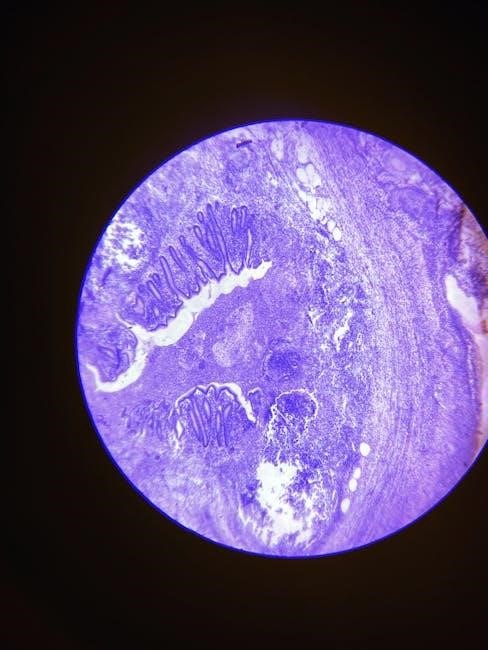
Intracellular transport, detailed in resources like the Molecular Biology of the Cell PDF, relies on motor proteins and vesicle trafficking for efficient delivery.
Molecular motors – kinesin, dynein, and myosin – are crucial for intracellular transport, converting chemical energy into mechanical work. These proteins “walk” along cytoskeletal filaments, facilitating vesicle and organelle movement within cells. Resources like the Molecular Biology of the Cell PDF extensively detail their structures and mechanisms.
Kinesin generally moves towards the plus-end of microtubules, while dynein moves towards the minus-end. Myosin interacts with actin filaments, powering muscle contraction and various cellular processes. Understanding these motors is fundamental to physical biology, as they exemplify how physical principles govern biological functions, and are often studied using advanced biophysical techniques.
Intracellular trafficking relies on vesicle formation and precise targeting, a process detailed in resources like the Molecular Biology of the Cell PDF. Vesicles bud from donor organelles, encapsulating cargo, and are then transported via motor proteins along cytoskeletal tracks. Targeting relies on specific Rab proteins and SNARE complexes, ensuring vesicles fuse with the correct acceptor compartment.
This system is vital for protein sorting, nutrient uptake, and waste removal. Physical biology examines the energetics and mechanics of vesicle formation, transport, and fusion, applying principles of diffusion, adhesion, and membrane curvature. Understanding these processes is crucial for comprehending cellular organization and function.
Diffusion and active transport are fundamental to intracellular dynamics, concepts explored within resources like the Molecular Biology of the Cell PDF. Diffusion, driven by concentration gradients, facilitates short-distance movement. However, cells often require active transport, utilizing energy to move molecules against their gradients.
This process relies on transport proteins, including channels and carriers. Physical biology investigates the rates of diffusion, the energetics of active transport, and the influence of cellular crowding. Understanding these mechanisms, detailed in Alberts’ texts, is crucial for comprehending nutrient uptake, waste removal, and signal transduction within cells.
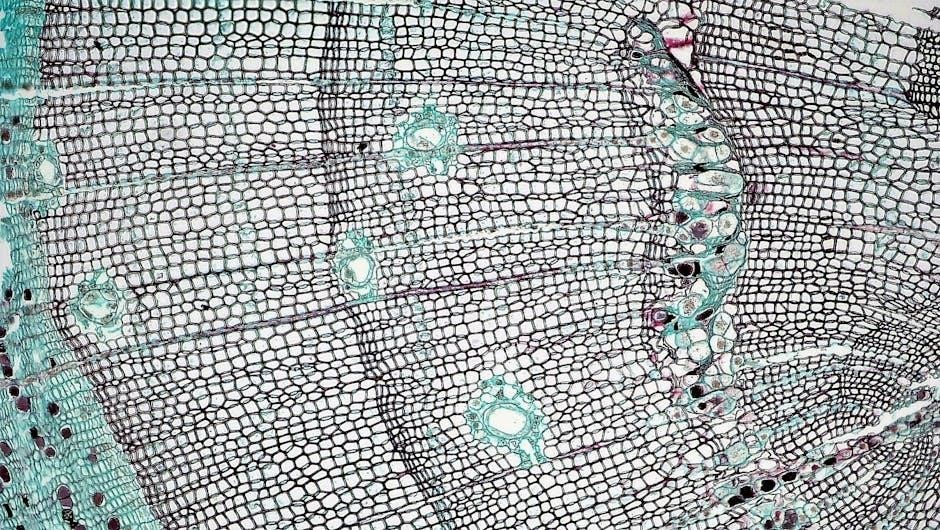
Energy conversion, detailed in resources like the Molecular Biology of the Cell PDF, centers on mitochondria and chloroplasts, powering cellular processes efficiently.
Mitochondria are central to cellular energy conversion, a topic extensively covered in resources like the Molecular Biology of the Cell PDF. These organelles harness chemical energy from nutrients to generate adenosine triphosphate (ATP), the cell’s primary energy currency.
Understanding mitochondrial function requires a physical biology approach, examining membrane potentials, proton gradients, and the intricate machinery of the electron transport chain. Resources detailing these processes, available for free download, are crucial for comprehending how cells efficiently power their diverse activities. Their structure and dynamics are key to cellular life.
Chloroplasts, vital in plant cells, convert light energy into chemical energy through photosynthesis – a process detailed in resources like the Molecular Biology of the Cell PDF. This conversion relies on intricate physical mechanisms within the thylakoid membranes, involving light-harvesting complexes and electron transport chains.
A physical biology perspective analyzes the efficiency of light capture, energy transfer, and carbon fixation. Free downloadable materials illuminate how chloroplast structure optimizes these processes. Understanding these biophysical principles is crucial for comprehending plant physiology and the foundation of most ecosystems.
ATP synthesis, the cellular energy currency production, is deeply rooted in thermodynamic principles, as explored in resources like the Molecular Biology of the Cell PDF. The process, occurring in mitochondria and chloroplasts, involves chemiosmosis – utilizing proton gradients to drive ATP synthase, a molecular motor.
A physical biology approach analyzes the free energy changes associated with each step, ensuring efficiency. Free downloads detail how the structure of ATP synthase facilitates this energy conversion. Understanding these thermodynamic constraints is vital for comprehending cellular metabolism and bioenergetics.
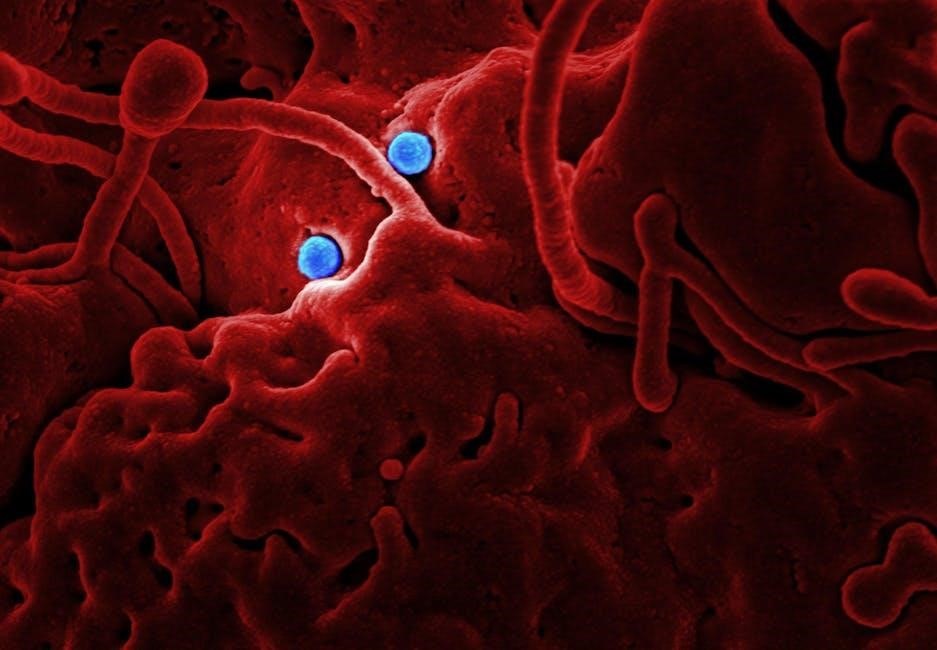
Cell signaling, detailed in Molecular Biology of the Cell PDF resources, involves receptor-ligand interactions and signal transduction pathways, crucial for cellular function.
Receptor-ligand interactions are fundamental to cell communication, initiating signaling cascades. These interactions, extensively covered in resources like the Molecular Biology of the Cell PDF, demonstrate specificity driven by molecular shape and affinity. Understanding these bonds—often detailed in Alberts’ texts—is crucial.
Ligands, such as hormones or neurotransmitters, bind to receptors, triggering conformational changes; These changes activate intracellular pathways. The strength of binding, governed by physical principles, dictates signaling efficacy. Studying these interactions, often through computational modeling (a topic in advanced physical biology), reveals how cells respond to their environment. Accessing free PDF versions aids comprehension.
Signal transduction pathways convert extracellular signals into intracellular responses. These pathways, thoroughly detailed in resources like the Molecular Biology of the Cell PDF, involve a cascade of molecular events. Alberts’ work emphasizes the physical aspects – protein conformational changes, phosphorylation, and diffusion – driving these processes.
Understanding these pathways requires applying physical biology principles to analyze reaction rates and pathway efficiencies. Resources offer insights into how cells amplify signals and achieve specificity. Studying these pathways, often aided by freely available PDF materials, reveals how cells coordinate complex behaviors and maintain homeostasis, crucial for cellular function.
Physical limits of signaling arise from diffusion rates, receptor densities, and the inherent noise in biochemical reactions. Resources like the Molecular Biology of the Cell PDF, authored by Alberts and colleagues, highlight these constraints. Signal propagation isn’t instantaneous; it’s governed by physical principles.
Analyzing these limits requires a biophysical approach, considering molecular crowding and the spatial organization of signaling components. Free PDF downloads offer detailed explanations of how cells overcome these challenges. Understanding these constraints is vital for comprehending cellular responses and designing effective therapeutic interventions, as detailed in available resources.
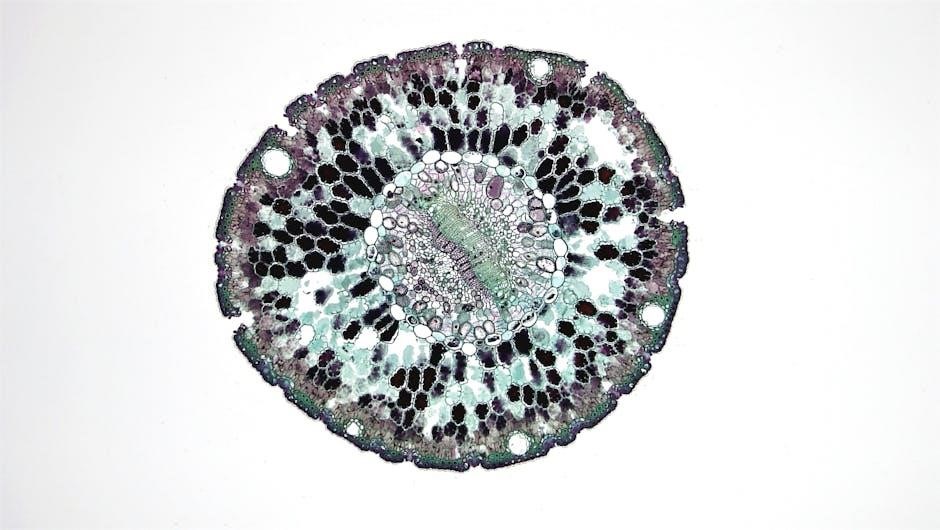
Cell cycle phases, mitosis, and checkpoints are physically regulated, as detailed in Molecular Biology of the Cell PDF resources.
The cell cycle consists of distinct phases: G1, S, G2, and M. G1 involves cell growth and preparation for DNA replication. The S phase is dedicated to DNA synthesis, ensuring accurate genome duplication. G2 focuses on further growth and preparing for mitosis.
Mitosis (M phase) encompasses nuclear division (karyokinesis) and cytoplasmic division (cytokinesis). Understanding these phases requires a physical biology approach, leveraging resources like the Molecular Biology of the Cell PDF. These resources detail the precise physical events and regulatory mechanisms governing each stage, offering insights into cellular control and division processes.
Mitosis relies heavily on physical forces generated by the mitotic spindle – a dynamic structure of microtubules. Accurate chromosome segregation demands precise coordination of these forces, ensuring each daughter cell receives a complete genome.
Molecular Biology of the Cell, available as a PDF, details how motor proteins like kinesin and dynein contribute to spindle assembly and chromosome movement. A physical biology perspective analyzes these forces mathematically, revealing the biophysical principles governing this crucial cellular process, and ensuring genomic stability.
Cell cycle checkpoints are crucial regulatory mechanisms ensuring genomic integrity during division. These checkpoints monitor key events – DNA replication, spindle assembly – halting progression if errors occur. Understanding these controls requires a physical biology approach, modeling signaling pathways as dynamic networks.
Resources like the Molecular Biology of the Cell PDF illustrate the molecular components involved. Analyzing checkpoint activation as a response to physical cues, like DNA damage, provides insights into cellular decision-making. This ensures accurate and timely cell division, preventing uncontrolled proliferation.
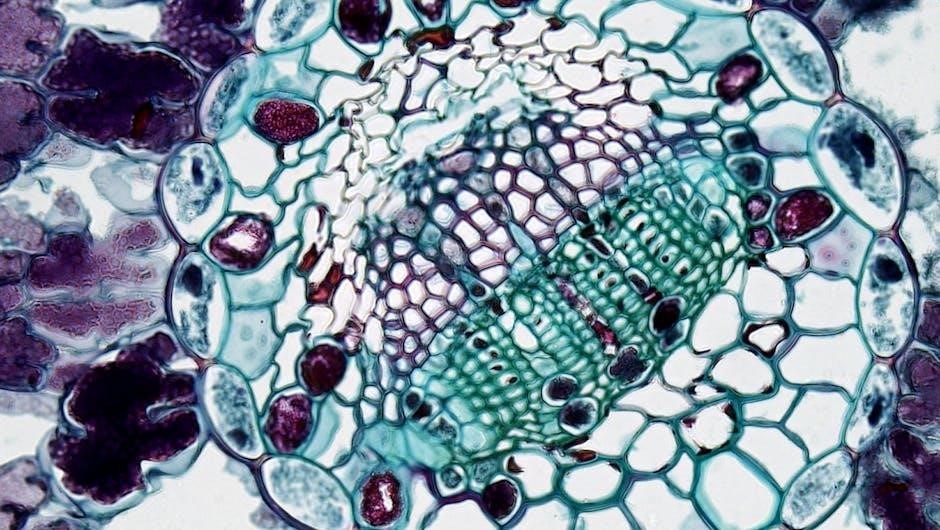
Cell death pathways, like apoptosis, involve precise physical changes. Studying these processes, detailed in Molecular Biology of the Cell PDFs, reveals biophysical mechanisms.
Apoptosis, or programmed cell death, isn’t merely biochemical; it’s profoundly physical. Cell shrinkage, blebbing of the plasma membrane, and DNA fragmentation all represent measurable physical alterations. Resources like downloadable PDFs of Molecular Biology of the Cell detail how caspases, key apoptotic enzymes, induce these changes.
These enzymes activate pathways leading to cytoskeletal remodeling – actin and tubulin dynamics are crucial. Membrane asymmetry, involving phosphatidylserine exposure, alters surface tension. Ultimately, apoptotic bodies form, physically detaching from the parent cell, a process driven by contractile forces. Understanding these physical aspects, aided by texts available online, is vital for comprehending disease processes.
Cell death pathways, including apoptosis and necrosis, are tightly regulated, involving intricate physical and biochemical feedback loops. Texts like Molecular Biology of the Cell, often available as a PDF, illustrate how the BCL-2 family proteins control mitochondrial outer membrane permeabilization – a critical physical event.
External signals, like growth factors, influence these pathways, modulating protein interactions and membrane dynamics. The p53 tumor suppressor plays a key role, activating pro-apoptotic genes. Dysregulation leads to cancer or autoimmune diseases. Studying these regulatory mechanisms, utilizing resources found online, is crucial for therapeutic interventions.

Cellular mechanics, explored in texts like Molecular Biology of the Cell (PDF versions available), examines viscoelasticity, adhesion, and mechanotransduction—vital biophysical processes.
Cellular viscoelasticity, a core concept within physical biology, describes the cell’s response to applied forces, exhibiting both viscous and elastic characteristics. Resources like downloadable PDF versions of Molecular Biology of the Cell detail how the cytoskeleton—actin filaments, microtubules, and intermediate filaments—contribute significantly to this property.
Understanding viscoelasticity is crucial for comprehending cell deformation, migration, and response to the extracellular matrix. The interplay between these components dictates a cell’s mechanical behavior, influencing processes from embryonic development to disease progression. Studying this requires biophysical approaches, bridging molecular details with macroscopic mechanical properties.
Cell adhesion, and its interaction with the extracellular matrix (ECM), are fundamental to tissue organization and function, central to physical biology. Texts like Molecular Biology of the Cell, available as a PDF, explain how cells utilize specific proteins – integrins, cadherins – to bind to the ECM.
This adhesion isn’t merely structural; it’s a dynamic process transmitting mechanical signals. The ECM’s composition and rigidity profoundly influence cell behavior, impacting processes like migration, proliferation, and differentiation. Understanding these interactions is vital for studying development, wound healing, and cancer metastasis.
Mechanotransduction describes how cells perceive and respond to mechanical stimuli – forces, pressure, and matrix stiffness – a core concept in physical biology. Resources like the Molecular Biology of the Cell PDF detail how cells convert these physical signals into biochemical responses.
This process relies on mechanosensors, proteins that alter conformation or activity upon force application. These signals trigger pathways influencing gene expression, cytoskeletal organization, and cell fate. Understanding mechanotransduction is crucial for comprehending tissue development, homeostasis, and disease, particularly in contexts like fibrosis and cancer.

Advanced studies involve single-molecule biophysics, computational modeling, and emerging technologies, often referencing resources like the Molecular Biology of the Cell PDF.
Single-molecule biophysics represents a cutting-edge area within physical biology, allowing researchers to observe individual biomolecules—proteins, DNA, RNA—and their interactions in real-time. This approach bypasses ensemble averaging, revealing hidden heterogeneity and dynamic behaviors crucial for understanding cellular processes. Access to comprehensive texts, such as the Molecular Biology of the Cell, often available as a PDF, provides foundational knowledge.
Techniques like optical tweezers and atomic force microscopy are central, enabling precise manipulation and force measurements. Studying these molecules at this scale offers insights into mechanisms governing molecular motors, protein folding, and DNA replication, furthering our grasp of cellular function and regulation.
Computational modeling is integral to physical biology, enabling the simulation and prediction of complex cellular behaviors. Utilizing principles from Molecular Biology of the Cell – often accessible as a PDF resource – researchers construct mathematical representations of cellular systems. These models integrate biophysical parameters to simulate processes like signal transduction, metabolic pathways, and cytoskeletal dynamics.
Such simulations aid in hypothesis testing, parameter estimation, and identifying emergent properties not readily apparent from experiments alone. Advanced techniques, including agent-based modeling and systems biology approaches, are increasingly employed to unravel the intricacies of cellular life.
Emerging technologies are revolutionizing physical biology, offering unprecedented insights into cellular function. Single-molecule biophysics, alongside advancements detailed in resources like the Molecular Biology of the Cell – often found as a PDF – allows observation of individual biomolecules. Microfluidics enables precise control over cellular microenvironments, while CRISPR-based tools facilitate targeted genome editing for biophysical studies.
Furthermore, super-resolution microscopy overcomes diffraction limits, revealing nanoscale cellular structures. These innovations, coupled with computational modeling, promise to unlock deeper understanding of cellular processes.